36
Popular Science Guide | A Full Introduction to ISO Tank Container Structure & Practical Shipping Rules
2026/8/5
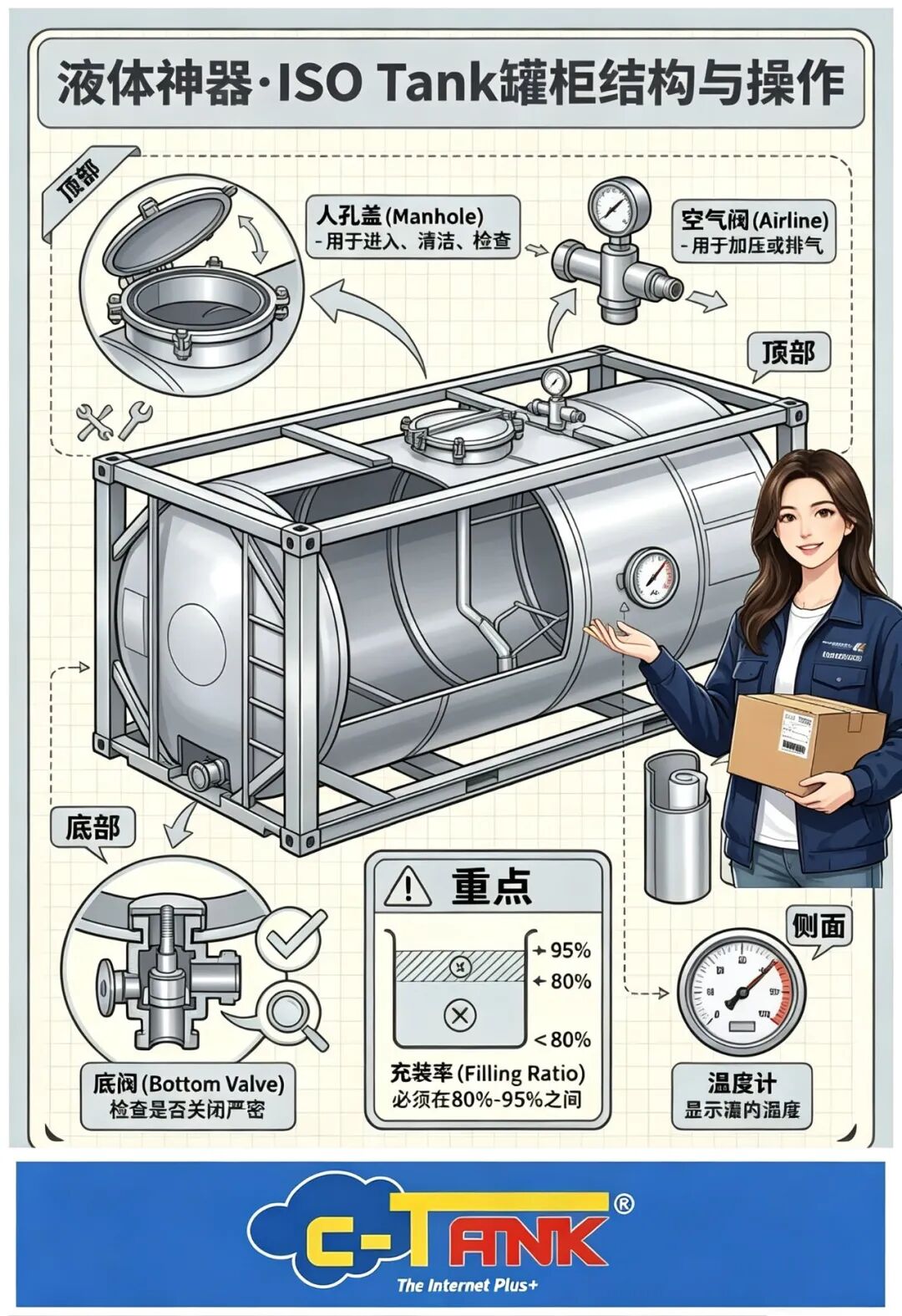
1. Introduction to Key Components of ISO Tank
1. Manhole (Top Position)
It is the exclusive access for staff to enter the tank for internal cleaning, inspection and maintenance. Liquid loading can also be completed through the manhole. Tight sealing is required after operation to avoid leakage.
2. Airline (Top Position)
It supports pressurization and exhaust. Exhaust is needed during loading and unloading; clean gas pressurization helps discharge viscous liquid in low temperature. Valve status must be supervised during transit to prevent overpressure.
3. Bottom Valve (Bottom Position)
The core outlet for liquid discharge. Tightness inspection is mandatory before long-distance shipment. Poor sealing will directly cause cargo leakage, which is a key inspection point at ports.
4. Thermometer (Side Position)
It monitors the real-time temperature inside the tank. Continuous temperature monitoring effectively avoids deterioration and tank expansion risks for thermal-sensitive and dangerous liquid goods.
2. Mandatory Rule: Filling Ratio Requirement
International ocean shipping standard: the filling ratio shall be strictly kept between 80% and 95%.
• Below 80%: Violent liquid sloshing caused by ship vibration will damage the tank structure and trigger safety hazards.
• Above 95%: Thermal expansion of liquid will lead to sharp pressure rise inside the tank, bringing risks of tank rupture, leakage and explosion.
This regulation applies to general liquid cargo and most liquid dangerous goods, which will be checked strictly before shipment.
3. Industry Brief
With excellent tightness, multimodal transport availability, recyclability and convenient loading & unloading, ISO tanks are widely used in exports of chemical raw materials, edible syrup, daily chemical liquid, resin and more.
Sealing check, filling ratio control and temperature monitoring are three key points to guarantee cargo safety in tank washing, loading and booking.
Preview: The next issue will introduce tank cleaning grades and document checklist for dangerous goods tank booking, welcome logistics & foreign trade practitioners to follow us.


CelerityTank Logistics (China) Ltd. all rights reserved Shanghai ICP No. 15056112 disclaimer